Without food security we become more dependent on importing food, suffer from increasing costs, and we lose the skills necessary to produce healthy and nutrient dense food.
Natural World
Natural World
Cities dwellers sometimes forget how vast the countryside is, and that we can explore our natural environment freely.
Connecting with the natural world can increase our fitness, lower our stress levels and can help with our mental wellbeing.
Use it or lose it, the choice is ours.
Wildlife
Wildlife
Mankind, plants, animals, insects, and microorganisms co-exist and maintain balance allowing life to thrive in a wonderful natural ecosystem.
We risk upsetting this balance with pesticides, herbicides, medicines, and tampering with the code of life endangering this delicate balance.
Renewables
Renewables
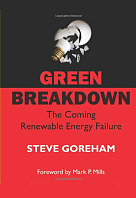
We need open discussion on renewables and Net-Zero policy, so we continue to maintain energy security, meet the needs of industry and domestic supply.
Governance
Governance
Our elected representatives in government work on behalf for the people, and offer a gateway to resolve grievances.
Often these representatives get preoccupied with policy and don't see real world negative impacts.
We the people can help create better policy by engaging with them.
Key Takeaways: Nebraska has experienced a dramatic decline in the number of extremely hot days. Average temperatures have increased by about 1.6°F, largely because of beneficially milder winters. Precipitation has improved, and drought shows no trend toward worsening. Neither severe tornadoes nor hail have become more common. Yields, especially for staple crops like corn, have...
Key Takeaways: Georgia has seen a decline in extreme heat, including fewer days with temperatures 100°F or higher. Average temperatures have risen at only half the national rate. Hurricane strikes have not increased, nor have wildfires. Major cash crops like peanuts have seen massive increases in yields over time. Short Summary: Temperature Trends: Georgia is...
Key Takeaways: Alaska’s extremely cold nighttime temperatures have moderated over the period of record, resulting in less deadly conditions for human health. There is no discernable long-term trend in precipitation – different parts of the state have seen diverse trends in annual snowfall. Wildfires have not become worse since at least 2001. Relative sea level...
Key Takeaways: Days with extreme heat have become less frequent in Maine over the period of record, while average overall temperature has only modestly increased. Precipitation has improved over time, with less drought. Wildfires have not become more frequent or severe. Sea level rise in Maine is lower than the global average. Maine’s major crops...
Key Takeaways: Climate extremes, like severe daytime highs and heavy rainfall, have not increased since 1900. The number of extremely hot days per year is comparable to the 1930s, average warming has been driven by the urban heat island effect producing warmer nights. There has been no long-term trend in average precipitation since 1900, major...
Welcome to York Voice. This project aims to inspire others to take an interest in how they are governed and interact with the people working on our behalf and for our benefit. Various library resources are provided on this website to aid…